Affiliate disclosure: As an Amazon Associate, this site earns from qualifying purchases linked in this article.
Perimenopause, the transitional phase leading up to menopause, brings about significant hormonal shifts, particularly a decline in estrogen. These changes can influence various aspects of a woman’s health, including bone density. Maintaining strong bones is a key concern during this time, as bone loss can accelerate.
Curcumin, a compound found in turmeric, has garnered attention for its potential health benefits. As women navigate the complexities of perimenopause, many seek natural approaches to support their well-being. This article will explore what current research suggests about curcumin’s potential role in supporting bone density during this important life stage.
Understanding Bone Health During Perimenopause
Bone is a dynamic tissue constantly undergoing a process of remodeling, where old bone is broken down (resorption) and new bone is formed. Estrogen plays a vital role in balancing this process. During perimenopause, fluctuating and declining estrogen levels can disrupt this balance, often leading to an increase in bone resorption without a proportional increase in bone formation. This imbalance can contribute to a gradual decrease in bone mineral density.
Maintaining good bone health during perimenopause involves a combination of factors, including adequate calcium and vitamin D intake, weight-bearing exercise, and lifestyle choices. Researchers are also exploring the potential of various compounds, including natural products like curcumin, to offer additional support.

Curcumin’s Potential Mechanisms in Bone Support
While research on curcumin and bone density in perimenopausal women is still emerging, preclinical studies and reviews suggest several potential mechanisms through which curcumin might influence bone health. Curcumin has been explored for its capacity to regulate various signaling pathways involved in bone metabolism [1]. For example, reviews indicate that curcumin may offer protective effects against bone loss in preclinical trials [2].
Some research suggests that curcumin’s influence on bone health could involve pathways like Nrf2 signaling [3] and SIRT3/FoxO3a signaling [4]. Additionally, curcumin and other natural products are being investigated for their role in cell death regulation, which is relevant to bone loss [5]. These proposed mechanisms highlight areas of ongoing scientific interest for understanding how curcumin might affect bone tissue.
What Clinical Studies Suggest for Postmenopausal Women
While direct studies on curcumin’s impact on bone density specifically during perimenopause are limited, some research has focused on postmenopausal women, which can offer insights. A systematic review and meta-analysis from 2025 explored the effects of curcumin on postmenopausal women’s health [6]. Another systematic review, also from 2025, examined the effect of curcumin on postmenopausal symptoms based on randomized controlled trials [7]. These reviews provide a broader look at curcumin’s potential benefits for this population.
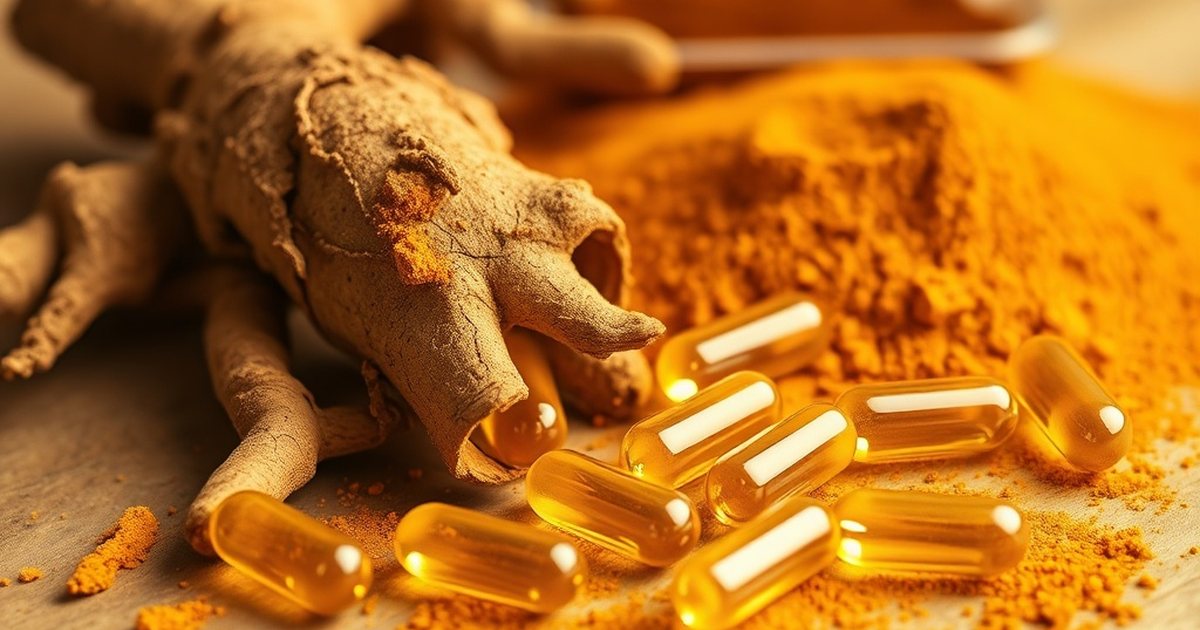

One randomized, triple-blind, placebo-controlled clinical trial from 2021 investigated the effect of nanomicelle curcumin supplementation, along with Nigella sativa oil, on gene expression levels related to bone health in postmenopausal women with low bone mass density [8]. This study represents a step toward understanding curcumin’s influence on specific markers of bone metabolism in women after menopause.
Curcumin in Context: Other Compounds and Bone Metabolism
Curcumin is often studied alongside other natural compounds known for their potential influence on health. For instance, a systematic review from 2022 explored the effects of resveratrol, curcumin, and quercetin supplementation on bone metabolism [9]. This broader perspective helps to contextualize curcumin’s role among other natural products being investigated for bone health.
Furthermore, research is also comparing the effects of different turmeric secondary metabolites across various resorptive bone diseases, indicating a wider interest in the components of turmeric beyond just curcumin [10]. This ongoing research helps to build a more complete picture of how various natural compounds might interact with bone health.

Limitations and Future Directions
It is important to acknowledge that the evidence specifically linking curcumin to improved bone density during perimenopause is currently limited. Much of the research cited here involves preclinical studies, systematic reviews of broader postmenopausal health, or studies looking at specific molecular markers rather than direct bone density measurements in perimenopausal women. While promising, these findings indicate potential and warrant further investigation.
Future research would ideally include more randomized controlled trials specifically designed to assess the impact of curcumin supplementation on bone mineral density and other markers of bone health in women experiencing perimenopause. This would provide clearer evidence regarding its potential utility in this specific population.
References
- The potential therapeutic role of curcumin in osteoporosis treatment: based on multiple signaling pathways. Frontiers in pharmacology, 2024
- Protective effects of curcumin against osteoporosis and its molecular mechanisms: a recent review in preclinical trials. Frontiers in pharmacology, 2023
- Nrf2 signaling in bone health: unlocking new avenues for osteoporosis management. Inflammopharmacology, 2025
- Curcumin preserves bone health compromised by diabetes by inhibiting osteoporosis through regulation of the SIRT3/FoxO3a signalling pathway. Scientific reports, 2025
- Cell death regulation: A new way for natural products to treat osteoporosis. Pharmacological research, 2023
- Effects of Curcumin on Postmenopausal Women’s Health: A Systematic Review and Meta-Analysis. Phytotherapy research : PTR, 2025
- The Effect of Curcumin on Postmenopausal Symptoms: A Systematic Review Based on Randomized Controlled Trials. International journal of molecular sciences, 2025
- The effect of nanomicelle curcumin supplementation and Nigella sativa oil on the expression level of miRNA-21, miRNA-422a, and miRNA-503 gene in postmenopausal women with low bone mass density: A randomized, triple-blind, placebo-controlled clinical trial with factorial design. Phytotherapy research : PTR, 2021
- Effects of Resveratrol, Curcumin and Quercetin Supplementation on Bone Metabolism-A Systematic Review. Nutrients, 2022
- Comparative Effects of Turmeric Secondary Metabolites Across Resorptive Bone Diseases. Metabolites, 2025
These statements have not been evaluated by the Food and Drug Administration. This information is not intended to diagnose, treat, cure, or prevent any disease. Content is for informational purposes only and is not medical advice; consult a qualified healthcare provider before starting any supplement. As an Amazon Associate we earn from qualifying purchases.
