Affiliate disclosure: As an Amazon Associate, this site earns from qualifying purchases linked in this article.
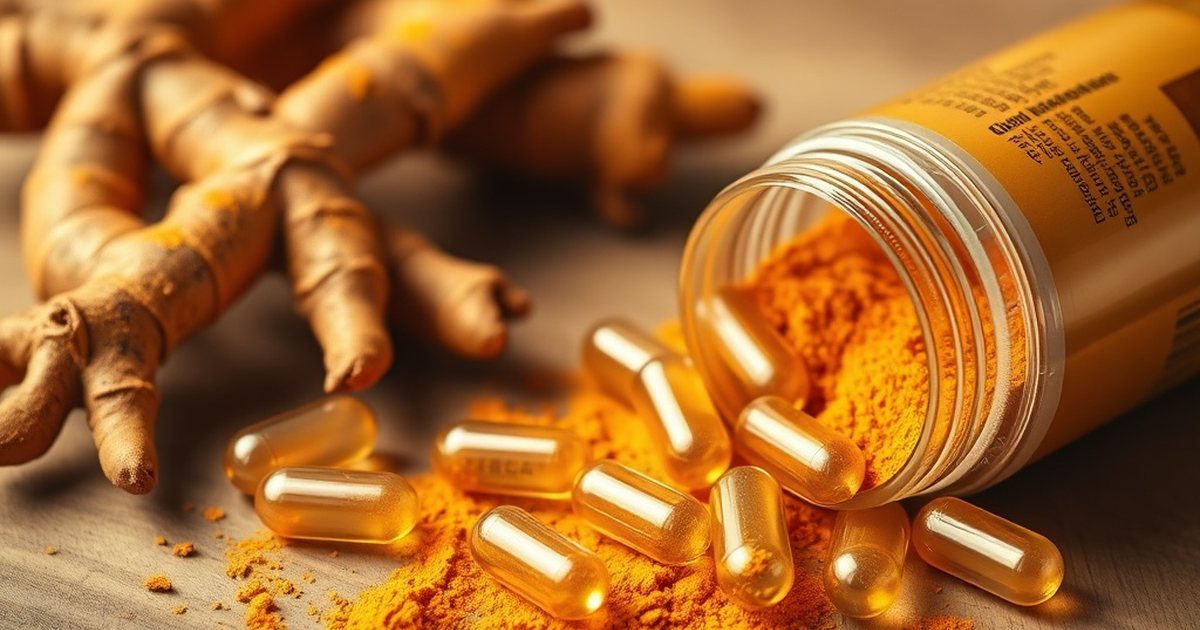
Curcumin, the primary bioactive compound in turmeric, has been studied extensively for its potential to support a healthy inflammatory response and antioxidant defenses — areas of particular interest during midlife and menopause. Yet a consistent finding across decades of research is that curcumin, in its native form, is poorly absorbed into the bloodstream, which limits how much of it actually reaches tissues where it could exert effects.
This article explains the bioavailability challenge in plain terms, summarizes what the evidence shows about why it happens, and outlines the strategies researchers have developed to improve absorption — so you can make more informed choices when evaluating supplements.
What Bioavailability Means and Why It Matters
Bioavailability refers to the fraction of an ingested substance that enters systemic circulation and becomes available at the site of physiological activity. For curcumin, the gap between what you swallow and what reaches your bloodstream is substantial. Early pharmacokinetic studies demonstrated that oral curcumin undergoes rapid metabolism in the gut and liver, resulting in very low plasma concentrations even at high doses [1].
This matters because many of the cellular pathways curcumin influences in laboratory studies — such as NF-κB signaling, Nrf2 activation, and modulation of inflammatory cytokines — require concentrations that are difficult to achieve in humans with standard curcumin powder [2]. The disconnect between promising in vitro data and modest clinical outcomes is largely attributed to this absorption barrier [3].
Why Plain Turmeric and Standard Curcumin Are Poorly Absorbed
Several interconnected factors limit curcumin’s bioavailability. First, curcumin is practically insoluble in water at physiological pH, which hinders its dissolution in gastrointestinal fluids — a prerequisite for absorption [1]. Second, it is chemically unstable in neutral to alkaline conditions, degrading rapidly before it can be taken up [4].

Third, curcumin is a substrate for extensive phase II metabolism (glucuronidation and sulfation) in enterocytes and hepatocytes, converting it into conjugated metabolites that are more water-soluble and rapidly excreted [1]. Fourth, efflux transporters such as P-glycoprotein actively pump curcumin back into the intestinal lumen, further reducing net absorption [5]. Together, these mechanisms mean that only trace amounts of free (unconjugated) curcumin typically appear in plasma after oral ingestion of standard preparations [6].
Piperine: The First Evidence-Based Enhancer
The landmark 1998 study by Shoba et al. demonstrated that co-administration of 20 mg piperine — the major alkaloid in black pepper — increased curcumin bioavailability by 20-fold in humans, primarily by inhibiting hepatic and intestinal glucuronidation [6]. This finding established that metabolic inhibition could meaningfully improve systemic exposure.
However, piperine’s effects are not without considerations. It inhibits multiple cytochrome P450 enzymes and drug transporters, which can alter the pharmacokinetics of concomitant medications — a relevant point for women in midlife who may be on prescription therapies [5]. Additionally, the magnitude of enhancement, while significant, still results in plasma curcumin levels in the low nanomolar range, which may be insufficient for some tissue targets [3].

Advanced Delivery Systems: Liposomal, Nanoparticle, and Solid Dispersion Technologies
Since the piperine discovery, formulation science has developed multiple strategies to bypass solubility and metabolic barriers. Liposomal encapsulation surrounds curcumin with phospholipid bilayers, protecting it from degradation and facilitating lymphatic uptake, which partially circumvents first-pass hepatic metabolism [7]. Clinical pharmacokinetic data show liposomal curcumin achieves higher peak concentrations and area-under-the-curve (AUC) values than standard curcumin or curcumin-piperine combinations [5].
Other approaches include solid lipid nanoparticles, polymeric micelles, and amorphous solid dispersions — each designed to enhance solubility, stabilize the molecule, and/or inhibit efflux transporters [5]. A 2021 review categorized these into three broad classes: (1) formulations that improve solubility and dissolution, (2) those that inhibit metabolism or efflux, and (3) those that alter the route of absorption (e.g., lymphatic) [5]. Notably, not all commercial “enhanced” products have published human pharmacokinetic data; the evidence base varies widely by technology [4].
Does Better Absorption Translate to Greater Clinical Effect?
Improved bioavailability is a necessary but not sufficient condition for clinical benefit. The 2019 Nutrients review emphasized that correlation between bioavailability and health outcomes depends on the target tissue, the specific metabolites formed, and the duration of exposure [3]. Some conjugated metabolites retain biological activity, and certain tissues (e.g., gastrointestinal mucosa) are exposed to much higher concentrations than plasma [1].

Moreover, a formulation that achieves higher Cmax (peak concentration) but rapid clearance may be less effective for chronic modulation of inflammatory pathways than one providing sustained, moderate levels [5]. Head-to-head clinical trials comparing different enhanced curcumin forms on the same endpoints remain limited, so claims of superiority should be viewed cautiously [4].
Practical Considerations When Choosing a Curcumin Supplement
For women navigating midlife, the supplement landscape can be confusing. Look for products that disclose the specific curcumin form (e.g., curcumin-phospholipid complex, liposomal, nanoparticle) and, ideally, provide a reference to a published human pharmacokinetic study for that exact formulation [5]. Vague claims like “enhanced absorption” without data are not evidence-based.
Consider whether the product includes piperine if you take medications metabolized by CYP3A4 or CYP2D6, or if you have a sensitive gastrointestinal tract, as piperine can increase intestinal permeability [6]. Liposomal and solid dispersion technologies may offer alternatives without metabolic inhibition [7]. Finally, remember that curcumin supplements are not a substitute for a varied, nutrient-dense diet — turmeric as a culinary spice still contributes polyphenols, fiber, and other compounds that support gut health [8].
References
- Bioavailability of curcumin: problems and promises. Molecular pharmaceutics, 2007
- Curcumin: A Review of Its Effects on Human Health. Foods (Basel, Switzerland), 2017
- Dietary Curcumin: Correlation between Bioavailability and Health Potential. Nutrients, 2019
- Curcumin, an active component of turmeric: biological activities, nutritional aspects, immunological, bioavailability, and human health benefits – a comprehensive review. Frontiers in immunology, 2025
- Improving Curcumin Bioavailability: Current Strategies and Future Perspectives. Pharmaceutics, 2021
- Influence of piperine on the pharmacokinetics of curcumin in animals and human volunteers. Planta medica, 1998
- Liposomal curcumin and its application in cancer. International journal of nanomedicine, 2017
- Ginger (Zingiber officinale Rosc.) and its bioactive components are potential resources for health beneficial agents. Phytotherapy research : PTR, 2021
These statements have not been evaluated by the Food and Drug Administration. This information is not intended to diagnose, treat, cure, or prevent any disease. Content is for informational purposes only and is not medical advice; consult a qualified healthcare provider before starting any supplement. As an Amazon Associate we earn from qualifying purchases.
