Affiliate disclosure: As an Amazon Associate, this site earns from qualifying purchases linked in this article.
Perimenopause can bring a range of changes, and for women also navigating thyroid conditions, understanding potential supportive approaches is often a priority. Curcumin, a compound found in turmeric, has gained attention for its various properties.
This article explores what current research suggests about curcumin’s interaction with thyroid health, particularly for women experiencing perimenopause. It’s important to approach this topic with an understanding that evidence in this specific area is limited and still developing.
Understanding Thyroid Health During Perimenopause
The perimenopausal transition involves significant hormonal shifts that can sometimes influence or coincide with thyroid function. Conditions like Hashimoto’s thyroiditis, an autoimmune thyroid disorder, are relatively common. Maintaining thyroid balance is crucial for overall well-being during this phase of life.
While perimenopause itself doesn’t cause thyroid conditions, the symptoms of hormonal fluctuations can sometimes overlap with those of an underactive thyroid, making diagnosis and management more complex. It’s always important to work with a healthcare provider for accurate diagnosis and management of any thyroid condition.

Curcumin’s General Properties and Thyroid Function
Curcumin is recognized for its various biological activities. Some research suggests that phytochemicals, including curcumin, may have effects on thyroid function and could play a role in thyroid disease [1]. This broad observation indicates a potential area of interest for further investigation.
However, the exact mechanisms by which curcumin might interact with the thyroid system are complex and not yet fully understood. Research is ongoing to clarify these potential interactions and their relevance to human health.
Curcumin and Hashimoto’s Thyroiditis: Early Insights
Hashimoto’s thyroiditis is an autoimmune condition where the immune system mistakenly attacks the thyroid gland. Some preliminary research has begun to explore the potential role of curcumin in individuals with Hashimoto’s. For instance, a double-blind randomized clinical trial is investigating the combined effects of an anti-inflammatory diet and curcumin supplementation on thyroid function and lipid profile in patients with Hashimoto’s thyroiditis [2]. The results of such studies, when available, may offer more specific insights.

Another double-blind randomized controlled clinical trial is also examining the additive effects of curcumin supplementation in addition to an anti-inflammatory diet on inflammatory indices in patients with Hashimoto’s Thyroiditis [3]. These studies suggest an interest in curcumin’s potential to support inflammatory pathways, which may be relevant in autoimmune conditions like Hashimoto’s. It’s important to remember that these are ongoing or very recent trials, and definitive conclusions should await full publication and further replication.
Bioavailability and Formulation Considerations
One challenge with curcumin supplementation is its relatively low bioavailability, meaning the body doesn’t absorb and utilize it very efficiently. Researchers are actively working on innovative ways to improve curcumin’s absorption. For example, some studies focus on innovative preparation methods to enhance oral bioavailability [4].
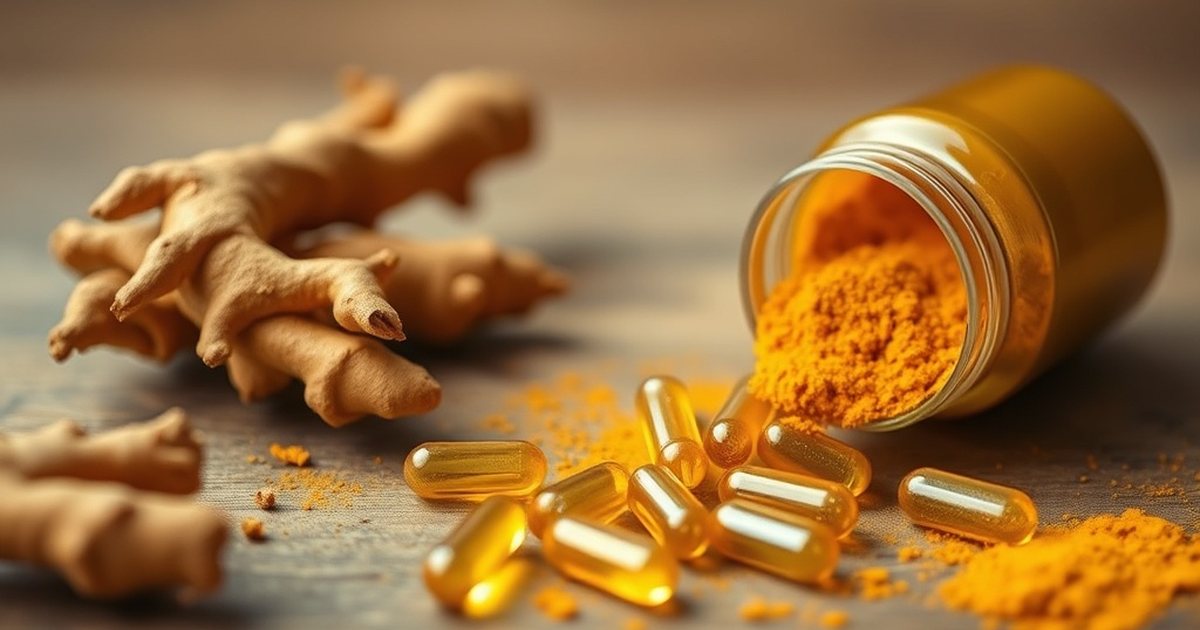
Other approaches include using cyclodextrin-based nanogels for stabilization and sensing of curcumin, which could potentially improve its delivery and effectiveness [5]. These advancements in formulation are important for ensuring that any potential benefits of curcumin can be realized.

The Limited Nature of Current Evidence
It is crucial to emphasize that while there is emerging interest and some preliminary studies on curcumin and thyroid health, particularly concerning Hashimoto’s thyroiditis, the overall evidence is limited. Many of the cited studies are either ongoing clinical trials or broad reviews that highlight potential areas of investigation rather than conclusive findings specific to perimenopausal women with thyroid conditions.
Therefore, while curcumin may hold promise, it is not currently established as a primary or sole intervention for managing thyroid conditions during perimenopause. Further robust research, including studies specifically designed for this population, is needed to draw more definitive conclusions.
References
- Effects of phytochemicals on thyroid function and their possible role in thyroid disease. Annals of the New York Academy of Sciences, 2019
- The Combined Effects of an Anti-Inflammatory Diet and Curcumin Supplementation on Thyroid Function and Lipid Profile in Patients With Hashimoto’s Thyroiditis: A Double Blind Randomised Clinical Trial. Endocrinology, diabetes & metabolism, 2026
- The Additive Effects of Curcumin Supplementation in Addition to an Anti-Inflammatory Diet on Inflammatory Indices in Patients With Hashimoto’s Thyroiditis (HT): A Double Blind Randomized Controlled Clinical Trial. Food science & nutrition, 2026
- Innovative preparation of curcumin for improved oral bioavailability. Biological & pharmaceutical bulletin, 2011
- Cyclodextrin-Based Nanogels for Stabilization and Sensing of Curcumin. ACS applied nano materials, 2024
These statements have not been evaluated by the Food and Drug Administration. This information is not intended to diagnose, treat, cure, or prevent any disease. Content is for informational purposes only and is not medical advice; consult a qualified healthcare provider before starting any supplement. As an Amazon Associate we earn from qualifying purchases.
