Affiliate disclosure: As an Amazon Associate, this site earns from qualifying purchases linked in this article.
If you’ve researched curcumin supplements, you’ve likely seen them paired with black pepper extract. The claim is straightforward: black pepper enhances curcumin absorption. But does the evidence support this pairing, and should it matter for your decision?
This article examines what peer-reviewed research actually shows about piperine and curcumin bioavailability—without the marketing spin. We’ll look at the science honestly, discuss what remains uncertain, and help you understand whether this combination is worth seeking out.
The Absorption Problem: Why This Pairing Exists
Curcumin’s main limitation isn’t its potential benefits—it’s getting it into your bloodstream in usable amounts. When taken orally, curcumin has notoriously low bioavailability: your body absorbs and retains very little of what you ingest [1]. This means a standard curcumin dose may deliver far less active compound than the dose suggests.
This absorption challenge is why researchers began investigating ways to enhance bioavailability. One promising approach emerged from traditional use and laboratory observation: combining curcumin with piperine, the active alkaloid in black pepper. The logic is biochemical rather than magical—but does it work?
What Research Shows: Piperine Does Increase Curcumin Levels
A landmark study in human volunteers found that piperine significantly improved curcumin’s pharmacokinetics (how the body processes it). When participants took curcumin with piperine, serum curcumin levels increased, and the compound remained in circulation longer [2]. This wasn’t a tiny effect—the enhancement was measurable and consistent across volunteers.
Subsequent research has reinforced this finding. The mechanism appears to involve piperine’s ability to slow the breakdown and elimination of curcumin in the liver and intestines, allowing more absorption [3]. In practical terms, piperine acts as a bioavailability enhancer—it doesn’t change curcumin itself, but it changes how your body handles it.

A 2022 review examining curcumin bioavailability across multiple strategies confirmed that piperine co-administration remains one of the most reliable and evidence-supported approaches [4]. This doesn’t mean it’s a cure-all solution, but within the landscape of absorption-enhancement methods, it has solid backing.
How Much Piperine Do You Actually Need?
The research showing benefit typically used specific doses of piperine. The landmark human study used 20 mg of piperine alongside curcumin, and this dose became a reference point in the literature [2]. However, many commercial supplements vary in their piperine content, and some include amounts too small to replicate the studied effect.
If you’re considering a curcumin supplement with added black pepper, checking the label for piperine quantity matters. A dose of 20 mg or nearby amounts is more likely to align with what research has examined. Supplements listing ‘black pepper extract’ without a specified piperine percentage offer no guarantee of meaningful enhancement.
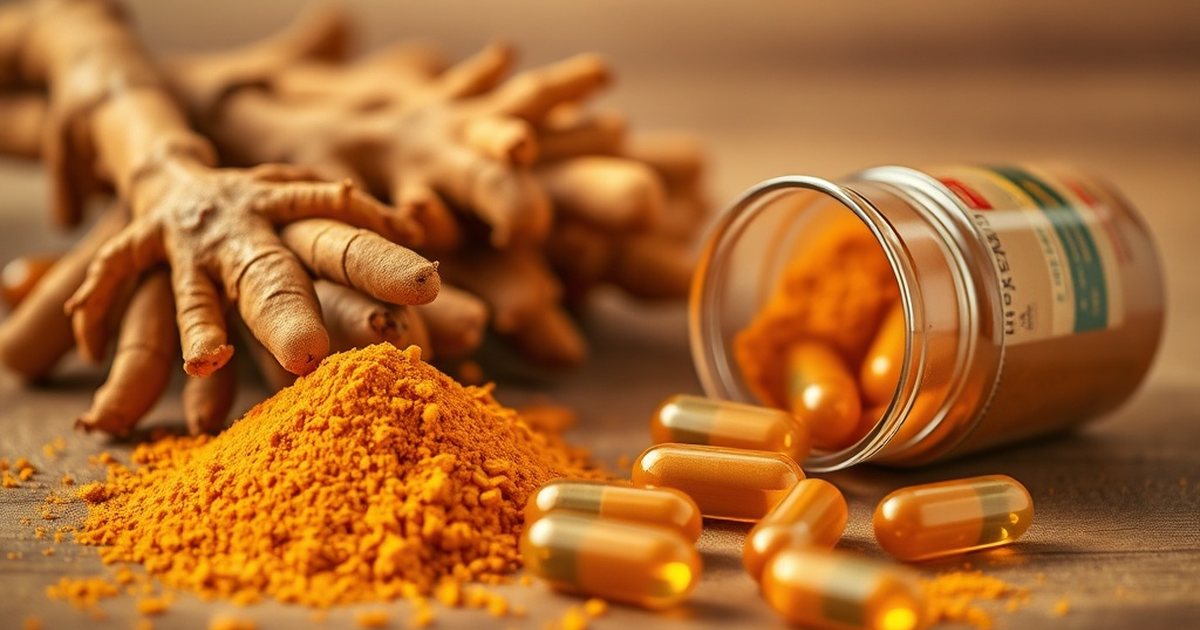
It’s also worth noting that more piperine isn’t necessarily better. Research has focused on efficacious doses, not on exploring whether doubling or tripling the amount produces proportionally greater benefit. Reasonable supplementation usually falls within established ranges.
Bioavailability Versus Health Outcomes: An Important Distinction
Here’s a nuance that matters: showing that piperine increases curcumin blood levels is not the same as proving it improves health outcomes. Bioavailability is a necessary step—you need the compound in your bloodstream—but elevated blood levels don’t automatically translate to disease reversal or symptom relief [5].

Research demonstrates the absorption enhancement reliably. Whether that enhancement produces meaningful differences in how women experience midlife changes, joint comfort, or other concerns remains less defined. Piperine improves the pharmacokinetics of curcumin; whether that leads to better clinical results for a given condition requires separate, specific evidence.
This distinction matters for realistic expectations. A supplement that enhances absorption is a smarter choice than one that doesn’t—but it’s not automatically a more powerful remedy. Bioavailability is foundational, not a guarantee of efficacy.
Practical Considerations: Timing, Food, and Formulations
If you’re taking curcumin and piperine, several practical factors influence how much your body actually absorbs. Curcumin absorption improves when taken with fat, and taking it during or shortly after a meal is recommended [1]. The presence of food in your digestive system affects how piperine works too, making the timing and context of supplementation genuinely important.
Some supplements use different delivery systems—liposomes, nanoparticles, or phospholipid complexes—to boost absorption independent of piperine. If you see these terms on a label, they represent alternative or complementary strategies to address the same underlying problem. Piperine is simpler, cheaper, and evidence-supported; it’s not the only way to improve bioavailability, but it’s a straightforward one.

If you already take other medications or supplements, be aware that piperine can affect how your body metabolizes certain drugs. This is another reason consulting a healthcare provider before starting any new supplement regimen is sensible, especially during midlife when medication use may be higher.
The Bottom Line: Should You Seek Out the Combination?
The evidence that piperine enhances curcumin absorption is solid and repeatable [2]. If you’re already considering curcumin supplementation, choosing a product that includes piperine in a meaningful dose (roughly 20 mg) is a reasonable, evidence-informed decision. It doesn’t cost much more, and it meaningfully increases the amount of curcumin your body actually absorbs.
However, a curcumin supplement without piperine isn’t worthless—it’s just less efficient. If you find a high-quality curcumin product without black pepper, taking it with a meal containing fat and being consistent with timing can still support absorption, even if the numbers won’t match a piperine-enhanced formula.
What matters most is choosing a supplement from a trustworthy manufacturer, understanding realistic expectations, and viewing supplementation as one small part of overall wellness—not as a standalone solution. Piperine is a smart addition if available; it’s not essential for all benefit.
References
- Bioavailability of curcumin: problems and promises. Molecular pharmaceutics, 2007
- Influence of piperine on the pharmacokinetics of curcumin in animals and human volunteers. Planta medica, 1998
- Quantum Chemical and Docking Insights into Bioavailability Enhancement of Curcumin by Piperine in Pepper. The journal of physical chemistry. A, 2016
- A Unifying Perspective in Blunting the Limited Oral Bioavailability of Curcumin: A Succinct Look. Current drug metabolism, 2022
- Curcumin: A Review of Its Effects on Human Health. Foods (Basel, Switzerland), 2017
These statements have not been evaluated by the Food and Drug Administration. This information is not intended to diagnose, treat, cure, or prevent any disease. Content is for informational purposes only and is not medical advice; consult a qualified healthcare provider before starting any supplement. As an Amazon Associate we earn from qualifying purchases.
