Affiliate disclosure: As an Amazon Associate, this site earns from qualifying purchases linked in this article.
Perimenopause brings hormonal fluctuations that can influence immune regulation, and many women notice a rise in autoimmune symptoms during this transition. Curcumin, the primary polyphenol in turmeric, has been studied for its ability to modulate inflammatory pathways, including macrophage polarization and cytokine production [1].
Clinical data specific to perimenopausal women are limited, but randomized trials in women with rheumatoid arthritis report improvements in antioxidant status, disease activity scores, and metabolic markers after curcumin supplementation [2][3]. A case report also highlights a rare but serious risk of autoimmune‑like hepatitis linked to turmeric supplements [4], underscoring the need for cautious, monitored use.
Mechanistic Insights: How Curcumin May Influence Immune Pathways
Laboratory and review data suggest curcumin can shift macrophages from a pro‑inflammatory M1 phenotype toward an anti‑inflammatory M2 profile, a mechanism that may dampen autoimmune‑driven tissue damage [1]. This polarization effect is accompanied by reduced secretion of tumor necrosis factor‑α, interleukin‑6, and other mediators implicated in systemic autoimmunity [5].
Beyond immune cells, curcumin has been shown to support intestinal mucosal barrier integrity, which may limit translocation of microbial products that trigger systemic inflammation [6]. A broad 2009 review also noted potential therapeutic effects across neurodegenerative, cardiovascular, pulmonary, metabolic, autoimmune, and neoplastic conditions, though human data remain sparse [7].

Clinical Evidence in Rheumatoid Arthritis: Findings from Women‑Focused Trials
A 2024 double‑blind, placebo‑controlled trial enrolled women with active rheumatoid arthritis and found that 8 weeks of curcumin supplementation significantly increased serum total antioxidant capacity compared with placebo, while malondialdehyde, a marker of lipid peroxidation, fell within the curcumin group but did not differ significantly between groups, and also lowered the Disease Activity Score‑28 [2].
A separate 2022 trial in a similar population reported reductions in insulin resistance, triglycerides, and high‑sensitivity C‑reactive protein, alongside decreases in body mass index and waist circumference compared with placebo, while fasting glucose and insulin did not change significantly [3]. Both studies used daily doses of 500 mg of a curcumin‑phospholipid complex, but sample sizes were under 100 participants each, limiting generalizability.
An experimental study in a prednisone‑treated rat model of rheumatoid arthritis showed that curcumin improved tibiofemoral joint histology and reduced cartilage erosion, providing mechanistic support for the human findings [8].

Potential Relevance for Other Autoimmune Conditions (SLE, Oral Lichen Planus)
A 2022 review on diet and systemic lupus erythematosus reported that adding curcumin to vitamin D supplementation had no additional effects on disease activity or inflammatory markers, and emphasized the scarcity of larger and longer trials in SLE [9].
Similarly, a 2024 narrative review of oral lichen planus listed curcumin among novel therapies that show promise for reducing symptoms and preventing recurrence, while noting that long‑term data are still needed [10].
Safety Signals: Hepatotoxicity and Drug Interactions
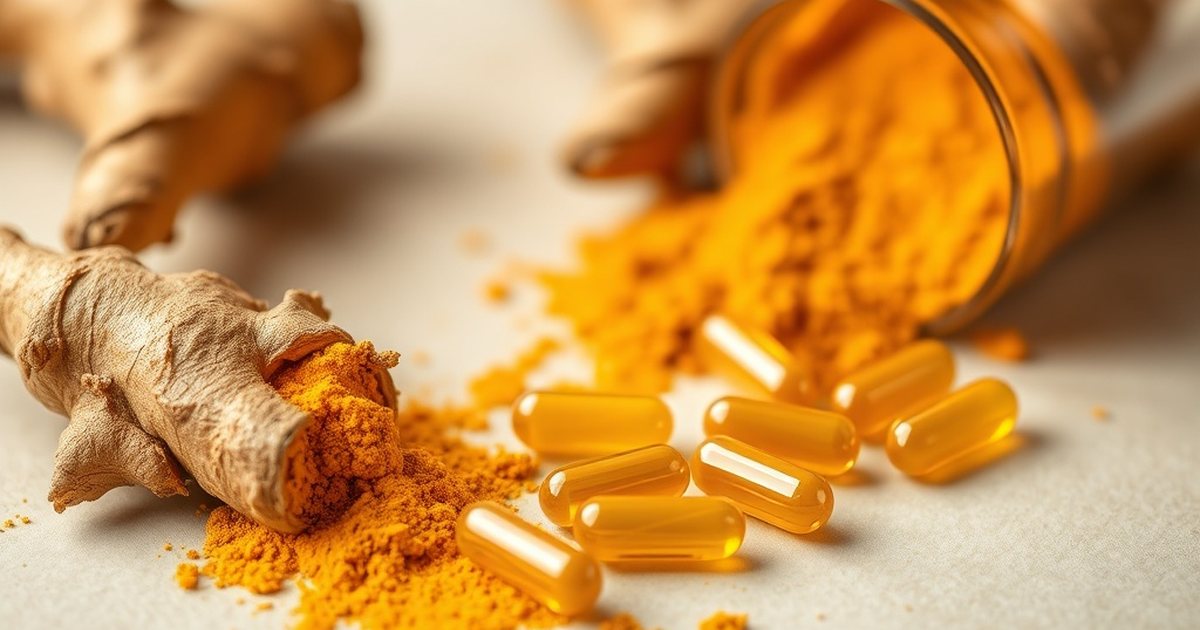
A 2026 case report described a woman who developed recurrent autoimmune‑like hepatitis after initiating a turmeric supplement; liver injury continued to worsen after the supplement was stopped and needed corticosteroid treatment, and it recurred more severely when she restarted the same supplement, suggesting a causal relationship [4]. Although rare, this illustrates that high‑dose or long‑term curcumin products can provoke idiosyncratic liver injury.
Curcumin also inhibits cytochrome P450 enzymes and may alter the metabolism of medications commonly used in perimenopause, such as hormone therapy, antidepressants, or disease‑modifying antirheumatic drugs. Monitoring liver enzymes and discussing supplement use with a prescribing clinician is advisable.

Practical Considerations for Perimenopausal Women
If a woman chooses to trial curcumin, selecting a formulation with enhanced bioavailability (e.g., phospholipid complex, nanoparticle, or piperine‑combined product) may achieve therapeutic plasma levels at lower doses, reducing gastrointestinal upset. Typical studied doses range from 500 mg to 1,500 mg of curcuminoids per day, divided with meals.
Because evidence for autoimmune benefit in perimenopause is indirect — derived mainly from rheumatoid arthritis trials and mechanistic studies — any supplementation should be viewed as adjunctive, not a replacement for prescribed disease‑modifying therapy. Regular follow‑up with a rheumatologist or primary care provider, including baseline and periodic liver function tests, helps balance potential advantages against the documented hepatotoxicity risk.
References
- Immunomodulatory Therapeutic Effects of Curcumin on M1/M2 Macrophage Polarization in Inflammatory Diseases. Current molecular pharmacology, 2023
- The efficacy of curcumin supplementation on serum total antioxidant capacity, malondialdehyde, and disease activity in women with rheumatoid arthritis: A randomized, double-blind, placebo-controlled clinical trial. Phytotherapy research : PTR, 2024
- Effects of curcumin supplementation on metabolic parameters, inflammatory factors and obesity values in women with rheumatoid arthritis: A randomized, double-blind, placebo-controlled clinical trial. Phytotherapy research : PTR, 2022
- Recurrent Drug-Induced Autoimmune-like Hepatitis due to Turmeric Supplementation. Journal of investigative medicine high impact case reports, 2026
- The Anti-Inflammatory and Immunomodulatory Activities of Natural Products to Control Autoimmune Inflammation. International journal of molecular sciences, 2022
- [Advances in the research of protective effect of curcumin on intestinal mucosal barrier function]. Zhonghua shao shang za zhi = Zhonghua shaoshang zazhi = Chinese journal of burns, 2019
- Potential therapeutic effects of curcumin, the anti-inflammatory agent, against neurodegenerative, cardiovascular, pulmonary, metabolic, autoimmune and neoplastic diseases. The international journal of biochemistry & cell biology, 2009
- Curcumin (Curcuma longa) Supplementation Improves Tibiofemoral Joint Outcomes in Low-Dose Prednisone-Treated Experimental Rheumatoid Arthritis. Microscopy and microanalysis : the official journal of Microscopy Society of America, Microbeam Analysis Society, Microscopical Society of Canada, 2025
- Diet and Systemic Lupus Erythematosus (SLE): From Supplementation to Intervention. International journal of environmental research and public health, 2022
- Oral Lichen Planus: A Narrative Review Navigating Etiologies, Clinical Manifestations, Diagnostics, and Therapeutic Approaches. Journal of clinical medicine, 2024
These statements have not been evaluated by the Food and Drug Administration. This information is not intended to diagnose, treat, cure, or prevent any disease. Content is for informational purposes only and is not medical advice; consult a qualified healthcare provider before starting any supplement. As an Amazon Associate we earn from qualifying purchases.
