Affiliate disclosure: As an Amazon Associate, this site earns from qualifying purchases linked in this article.
Turmeric, a vibrant yellow spice, has a long history of use in traditional practices. Its potential benefits are largely attributed to a group of active compounds called curcuminoids, with curcumin being the most well-known.
When considering turmeric supplements, it’s common to encounter various forms, each with distinct characteristics. Understanding the differences between whole turmeric, standardized extracts, and specific curcuminoid formulations can help you make informed choices.
What are Curcuminoids?
Curcuminoids are the primary active compounds found in turmeric (Curcuma longa). These polyphenolic compounds are responsible for turmeric’s characteristic yellow color and many of its studied properties. The three main curcuminoids are curcumin, demethoxycurcumin, and bisdemethoxycurcumin. Of these, curcumin is typically the most abundant and most researched.
When you see a turmeric supplement, the term ‘curcuminoids’ generally refers to this combination of active compounds. Research often focuses on the effects of these curcuminoids, sometimes individually but often as a blend, in various health contexts.

Whole Turmeric Powder: The Traditional Approach
Whole turmeric powder is simply dried and ground turmeric root. It contains all the natural components of the plant, including curcuminoids, essential oils, and other plant compounds. In its whole form, turmeric typically contains a relatively low percentage of curcuminoids, often ranging from 2% to 5%.
While whole turmeric is excellent for culinary use, the lower concentration of curcuminoids means that larger quantities would be needed to achieve the levels often explored in research studies. Some formulations, however, combine turmeric extract with its essential oil, which has been shown to enhance brain bioavailability in animal models [1]. This suggests that other compounds in whole turmeric may play a role beyond just the curcuminoids.
Standardized Turmeric Extracts: Concentrated Curcuminoids
Standardized turmeric extracts are processed to contain a specific, higher concentration of curcuminoids, often 95% or more. This standardization aims to provide a consistent dose of the active compounds, which is often preferred in research settings and for supplemental use where higher concentrations are desired.

The primary advantage of standardized extracts is the increased potency and consistency of curcuminoid content. This allows for smaller doses to deliver a significant amount of curcuminoids compared to whole turmeric powder. Many studies investigating the potential benefits of turmeric utilize standardized extracts [2][3].
Enhanced Bioavailability Formulations: Addressing a Key Challenge
One of the long-standing challenges with curcuminoids is their relatively low bioavailability, meaning they are not easily absorbed and utilized by the body. To overcome this, various enhanced bioavailability formulations have been developed. These often involve combining curcuminoids with other substances or using specialized delivery systems.
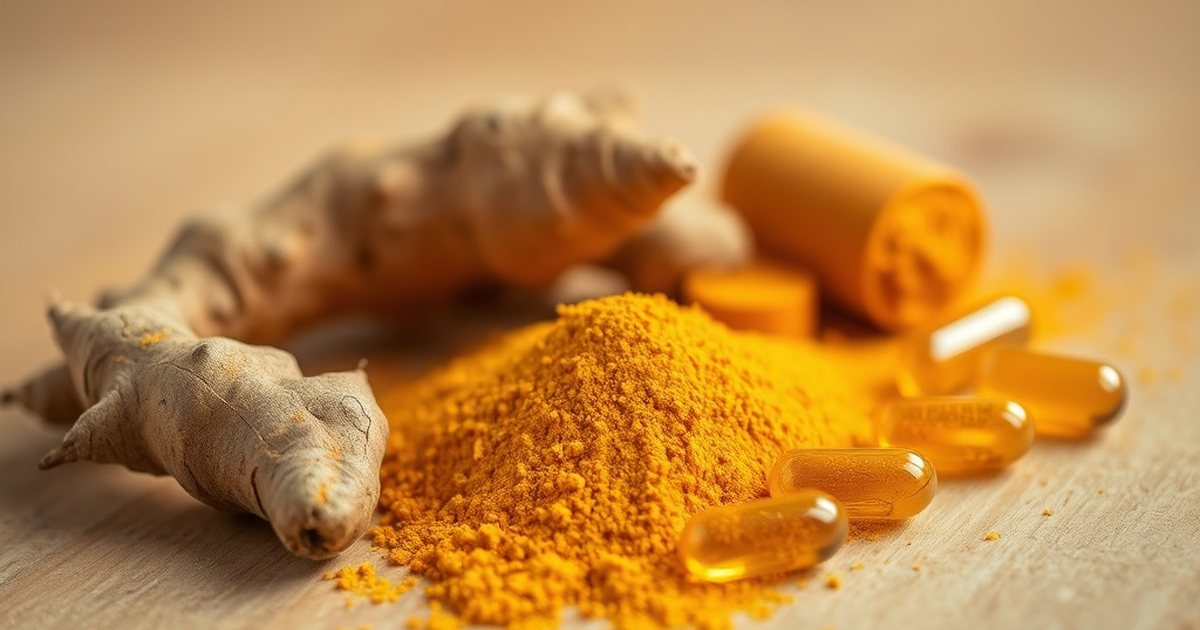
Examples of such formulations include curcuminoids complexed with phospholipids, encapsulated in micelles, or formulated as water-dispersible extracts. For instance, a water-dispersible high curcuminoid turmeric extract demonstrated comparative bioavailability against a generic turmeric extract in a randomized, cross-over study [4]. Other research has explored self-nanoemulsifying drug delivery systems loaded with curcumin to improve efficacy both in vitro and in vivo [5].
Choosing Among Curcumin Forms: Considerations for Midlife Women
When deciding between different curcumin forms, consider your individual needs and goals. If you’re looking to incorporate turmeric into your diet for general wellness, whole turmeric powder is an excellent culinary spice. For those seeking higher concentrations of curcuminoids, often explored in research for various purposes, a standardized extract might be more suitable.

If bioavailability is a primary concern, especially given the challenges with curcumin absorption, enhanced bioavailability formulations may offer an advantage. Research on specific formulations has shown potential benefits in areas like chronic knee pain [2][3] and muscle soreness and function recovery in active adults [6].
It’s important to remember that the ‘best’ form can depend on the specific application and individual response. Always read product labels carefully to understand the curcuminoid content and any added ingredients.
References
- Neuroprotective Effect of Turmeric Extract in Combination with Its Essential Oil and Enhanced Brain Bioavailability in an Animal Model. BioMed research international, 2021
- A Multicenter, Randomized, Double-Blind, Placebo-Controlled Trial Assessing Efficacy and Safety of a Novel Low-Dose Turmeric Extract Formulation in Healthy Adults with Chronic Knee Pain. Clinical pharmacology : advances and applications, 2021
- Efficacy and Safety of a Novel Low-Dose Water-Dispersible Turmeric Extract in the Management of Knee Osteoarthritis: A Randomized, Double-Blind, Placebo-Controlled Clinical Trial. Journal of pain research, 2025
- Comparative bioavailability of curcuminoids from a water-dispersible high curcuminoid turmeric extract against a generic turmeric extract: a randomized, cross-over, comparative, pharmacokinetic study. The Journal of pharmacy and pharmacology, 2021
- In Vitro and In Vivo Efficacy of Topical Dosage Forms Containing Self-Nanoemulsifying Drug Delivery System Loaded with Curcumin. Pharmaceutics, 2023
- A randomized, placebo-controlled, crossover clinical trial to evaluate the effect of a turmeric formulation on muscle soreness and function recovery in moderately active adults. Journal of the International Society of Sports Nutrition, 2025
These statements have not been evaluated by the Food and Drug Administration. This information is not intended to diagnose, treat, cure, or prevent any disease. Content is for informational purposes only and is not medical advice; consult a qualified healthcare provider before starting any supplement. As an Amazon Associate we earn from qualifying purchases.
