Affiliate disclosure: As an Amazon Associate, this site earns from qualifying purchases linked in this article.
Perimenopause marks a transition when estrogen levels begin to fluctuate and decline, accelerating bone resorption relative to formation. This shift raises the risk of osteopenia and osteoporosis, prompting many women to look for dietary strategies that might support skeletal health.
Interest in curcumin, the active polyphenol in turmeric, has grown because of its anti‑inflammatory and antioxidant properties. However, the human data specifically addressing curcumin bone density perimenopause are sparse; most published work involves postmenopausal women or mechanistic models, and the overall evidence base remains limited.
Why Bone Health Matters During Perimenopause
Estrogen helps maintain the balance between osteoclasts, which break down bone, and osteoblasts, which build it. As estrogen wanes, osteoclast activity often outpaces osteoblast activity, leading to net bone loss. This process can begin years before the final menstrual period, making early attention to bone‑supportive habits important. A comprehensive review of polyphenols and bone health notes that dietary polyphenols may influence bone remodeling pathways [1].
Lifestyle factors such as weight‑bearing exercise, adequate calcium and vitamin D, and avoidance of smoking remain the cornerstone of osteoporosis risk reduction. Supplements are considered adjuncts, not replacements, for these proven strategies.

What the Research Says About Curcumin and Bone Turnover
A systematic review and meta‑analysis of curcumin supplementation in postmenopausal women reported modest improvements in several bone turnover markers, including reductions in serum C‑telopeptide and increases in osteocalcin, although the magnitude of change was small and heterogeneity across trials was high [2].
The authors concluded that curcumin may have a favorable effect on bone metabolism, but they emphasized the need for larger, longer‑duration trials before any firm recommendations can be made [2].
Mechanistic Insights: Polyphenols, Nrf2, and Bone Cells
Polyphenols such as curcumin are thought to act through multiple signaling pathways. A recent review highlighted that curcumin can activate the Nrf2 antioxidant response, which in turn may protect osteoblasts from oxidative stress and inhibit osteoclast differentiation [3].

Another comprehensive review of polyphenols and bone health summarized evidence that these compounds modulate inflammatory cytokines, Wnt/β‑catenin signaling, and microRNA expression, all of which are relevant to bone remodeling [1].
Clinical Trials Using Nanomicelle Curcumin in Postmenopausal Women
Two triple‑blind, placebo‑controlled trials examined a nanomicelle formulation of curcumin, sometimes combined with Nigella sativa oil, in postmenopausal women with osteopenia or primary osteoporosis. In the first trial, 6 months of supplementation with curcumin combined with Nigella sativa oil significantly lowered serum alkaline phosphatase compared with placebo, while osteocalcin and osteopontin did not differ significantly between groups [4].
The second trial measured expression of microRNAs linked to bone metabolism (miRNA‑21, miRNA‑422a, miRNA‑503) and found that only miRNA‑21 changed significantly, rising in the groups that received Nigella sativa oil alone or combined with curcumin [5].
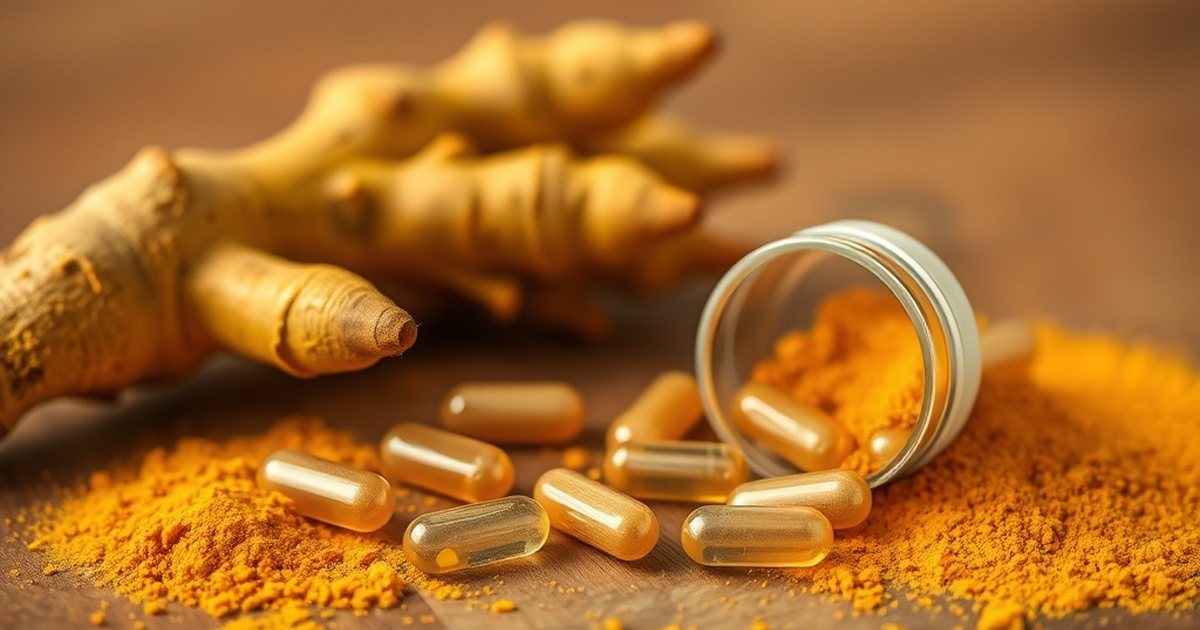
Both studies were relatively small (about 120 participants each), short‑term, and used a specialized nanomicelle delivery system that is not widely available in commercial supplements. These limitations restrict the generalizability of the findings to typical over‑the‑counter curcumin products.

Curcumin in Osteoarthritis‑Related Hand Pain: A Related Finding
While not a bone density outcome, an internet‑based randomized trial evaluated a supplement combination containing curcumin among people with symptomatic hand osteoarthritis. Hand pain scores over 12 weeks did not differ significantly between participants receiving the active supplement and those receiving placebo [6].
This result does not point to a benefit for hand pain, and the study did not assess bone structure or density, and the formulation included other ingredients, making it difficult to isolate curcumin’s specific contribution.
References
- Polyphenols and Bone Health: A Comprehensive Review of Their Role in Osteoporosis Prevention and Treatment. Molecules (Basel, Switzerland), 2025
- Effects of Curcumin on Postmenopausal Women’s Health: A Systematic Review and Meta-Analysis. Phytotherapy research : PTR, 2025
- Nrf2 signaling in bone health: unlocking new avenues for osteoporosis management. Inflammopharmacology, 2025
- Efficacy of nanomicelle curcumin, Nigella sativa oil, and their combination on bone turnover markers and their safety in postmenopausal women with primary osteoporosis and osteopenia: A triple-blind randomized controlled trial. Food science & nutrition, 2022
- The effect of nanomicelle curcumin supplementation and Nigella sativa oil on the expression level of miRNA-21, miRNA-422a, and miRNA-503 gene in postmenopausal women with low bone mass density: A randomized, triple-blind, placebo-controlled clinical trial with factorial design. Phytotherapy research : PTR, 2021
- Efficacy and safety of a supplement combination on hand pain among people with symptomatic hand osteoarthritis an internet-based, randomised clinical trial the RADIANT study. Osteoarthritis and cartilage, 2021
These statements have not been evaluated by the Food and Drug Administration. This information is not intended to diagnose, treat, cure, or prevent any disease. Content is for informational purposes only and is not medical advice; consult a qualified healthcare provider before starting any supplement. As an Amazon Associate we earn from qualifying purchases.
