Affiliate disclosure: As an Amazon Associate, this site earns from qualifying purchases linked in this article.
As women navigate midlife and menopause, many explore natural compounds like curcumin, a key component of turmeric. Understanding what you’re buying is crucial, and that starts with deciphering curcumin label claims. Labels often highlight potency, purity, and bioavailability, but what do these terms truly mean for a consumer?
This guide aims to provide clear, evidence-based information to help you make informed decisions when selecting a curcumin supplement. We’ll explore common label claims and what to consider when evaluating different products, focusing on practical insights for women seeking to understand their options.
Understanding Curcumin vs. Turmeric Extract
First, it’s important to distinguish between turmeric extract and curcumin. Turmeric (Curcuma longa) is a spice widely used in cooking and traditional practices [1]. Within turmeric, a group of compounds called curcuminoids are responsible for many of its characteristic properties. Curcumin is the most abundant and well-studied of these curcuminoids [2].
Many supplements specify ‘turmeric extract’ or ‘curcumin extract.’ A turmeric extract typically means a concentrated form of the turmeric root, which contains various compounds including curcuminoids. A ‘curcumin’ supplement, on the other hand, usually indicates a product standardized to a higher percentage of curcuminoids, often 95% or more. This standardization is a key factor in understanding the ‘potency’ of a supplement.
Potency: What ‘Standardized to Curcuminoids’ Means
When a curcumin label states ‘standardized to 95% curcuminoids,’ it means that the extract has been processed to ensure a consistent concentration of these active compounds. This standardization is important because the natural content of curcuminoids in raw turmeric can vary significantly. A higher percentage of curcuminoids generally indicates a more concentrated product, meaning you would need less of the extract to get a specific amount of active curcuminoids.
For individuals exploring curcumin for various health interests, such as supporting comfort in joints or general well-being during midlife, understanding potency is key [3]. While the specific ‘ideal’ dosage can vary depending on individual needs and the formulation, a standardized product offers a more predictable amount of the active compound per serving, which can be helpful for consistency.

Purity: Examining ‘Fillers’ and Additives
Purity refers to the absence of unwanted substances in a supplement. This includes heavy metals, pesticides, microbial contaminants, and unnecessary ‘fillers’ or artificial ingredients. A high-quality curcumin supplement should clearly list all ingredients, allowing consumers to identify what they are taking. Some manufacturers may include excipients, binders, or flow agents to aid in capsule formation or stability, which are generally harmless but are not active ingredients.
For women considering supplements during midlife and menopause, choosing products with minimal, clearly identified additives can be a preference. Some brands undergo third-party testing to verify purity and potency, which can be an additional indicator of product quality. This article does not evaluate individual products’ purity claims, but the general principle of choosing well-sourced and transparently labeled supplements is a sensible approach.
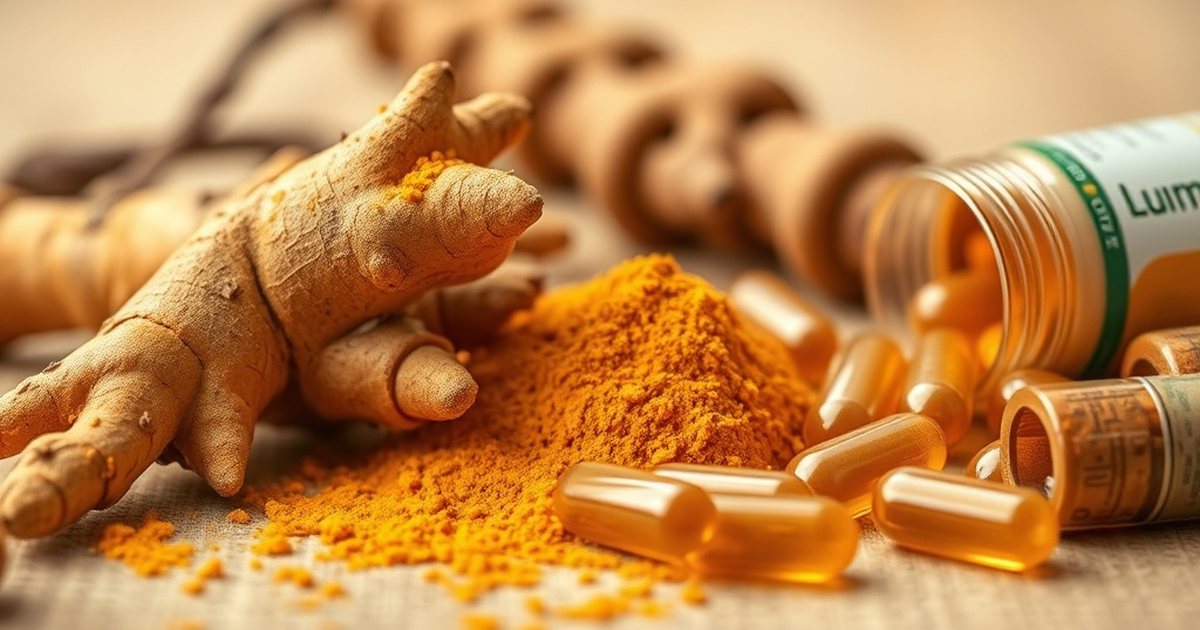
Bioavailability: Why it Matters for Curcumin
One of the most frequently discussed curcumin label claims is ‘enhanced bioavailability.’ Bioavailability refers to the proportion of a substance that enters the circulation when introduced into the body and is thus able to have an effect. Curcumin, in its natural form, is known to have relatively low bioavailability, meaning that a significant portion may not be absorbed effectively by the body [4].
To address this, many curcumin supplements incorporate various strategies to enhance absorption. Common approaches include combining curcumin with piperine (an extract from black pepper), formulating it with phospholipids (liposomal curcumin), or creating micellar or nanoparticle formulations. Piperine, for example, has been shown to improve the systemic availability of curcumin [4].
When a label claims ‘enhanced bioavailability,’ it often refers to one of these formulation strategies. For individuals looking to maximize the potential benefits of curcumin, choosing a product with a proven bioavailability-enhancing strategy might be a consideration. The goal is to ensure that a greater amount of the active curcuminoids can be utilized by the body.

Navigating Specific Bioavailability Claims
Different bioavailability-enhanced forms of curcumin exist, each with its own method of improving absorption. Some common forms you might see on labels include:
- Curcumin with Piperine: As mentioned, piperine from black pepper can enhance curcumin’s systemic availability [4]. This is a widely used and studied approach.
- Liposomal Curcumin: In this form, curcumin is encapsulated within liposomes (fat-based vesicles), which can help it bypass digestive breakdown and improve absorption.
- Micellar Curcumin: This involves formulating curcumin into small micelles, which are tiny spheres that can enhance solubility and absorption in the gut.
- Curcumin Phytosomes: Here, curcumin is complexed with phospholipids, aiming to improve its passage through cell membranes.

When evaluating these claims, it’s helpful to look for products that provide information about the specific technology used and ideally, references to studies supporting the enhanced bioavailability of their particular formulation, though this article does not rank individual brands. The major branded formulations do have their own published pharmacokinetic studies, so a manufacturer citing one is making a checkable claim. For women in midlife, understanding these distinctions can help in selecting a product that aligns with their desired approach to supplementation.
Safety Considerations and Potential Interactions
While curcumin is generally considered well-tolerated, it’s important to be aware of potential safety considerations. Some individuals may experience digestive upset, such as stomach discomfort or diarrhea, especially with higher doses. Curcumin can also interact with certain medications, including blood thinners, and could potentially affect blood sugar levels [4].
Women who are pregnant or breastfeeding, or who have pre-existing health conditions such as gallbladder issues, should exercise caution and consult a healthcare professional before taking curcumin supplements. It is always wise to discuss any new supplement with your doctor, especially if you are taking other medications or have chronic health concerns. The information presented here is for educational purposes and should not replace professional medical advice.
References
- Pharmacology of Curcuma longa. Planta medica, 1991
- Curcumin: A Golden Approach to Healthy Aging: A Systematic Review of the Evidence. Nutrients, 2024
- The efficacy and safety of Curcuma longa extract and curcumin supplements on osteoarthritis: a systematic review and meta-analysis. Bioscience reports, 2021
- Curcumin-piperine co-supplementation and human health: A comprehensive review of preclinical and clinical studies. Phytotherapy research : PTR, 2023
These statements have not been evaluated by the Food and Drug Administration. This information is not intended to diagnose, treat, cure, or prevent any disease. Content is for informational purposes only and is not medical advice; consult a qualified healthcare provider before starting any supplement. As an Amazon Associate we earn from qualifying purchases.
